

“Have you ever struggled to own your story? ” For me, being adopted was one of the hardest parts to accept,It took me three decades to fully accept and embrace my adoption story. What might seem simple to some was one of the most challenging aspects of my identity to own. In the past, I rarely discussed it, but lately, I’ve become more open about it. However, adoption is still not a topic I initiate myself. You might think it’s because of the emotional weight it carries, but that’s not entirely true. It’s more about dealing with the ignorance of society and carrying unanswered questions. So, why have I decided to share my story as an adopted individual? Read on to find out.
Defining Adoption
According to the dictionary, adoption is the legal process through which a person or a couple becomes the parent(s) of a child who is not biologically their own. It involves assuming the rights and responsibilities of a parent, providing care, support, and love to the adopted child.
Adoption, from my personal perspective, is a label that conceals numerous assumptions. It may sound appealing, but in reality, it deviates from the norm. It can feel like a disguised form of child trafficking, as if one is treated as a product rather than a human being.
On the other hand, from a broader world perspective, adoption is often seen as a noble act, a way to ensure the rights and well-being of the child. It is considered a means to provide a loving and stable home for children who may not have had that opportunity otherwise.
I am aware that I cannot speak for all adoptees, and my story is solely based on my own experiences, which may not be representative of every adopted child. However, I hope that sharing my journey can contribute to raising awareness about adoption. Regardless of our individual stories, I believe that at the core, we are all engaged in the process of self-discovery and acceptance. This quest for self-identity and acceptance is not exclusive to adoptees but applies to everyone.
The Personal Journey of Self-Discovery and Acceptance
Where do you come from? Whose behavior do you inherit? Who do you resemble, and how did it come to be? These simple questions that many can answer remain unanswered for adoptees like me.
The absence of a reference point becomes a daily confrontation as people’s curiosity piques. It can be painful at times, and though unintentional, it would be more considerate if people asked if I’m open to discussing it.
As I’ve grown older, I’ve come to realize that knowing your origins, your foundation, brings a sense of peace and stability. It explains the root of my restlessness, a truth I reluctantly accepted. I firmly believe that your starting point doesn’t define your destination, but being grounded is essential. So, how does an adoptee find their roots, and is it something I should even desire? Well, there’s still much to discover.
Acceptance Surrounding Adoption
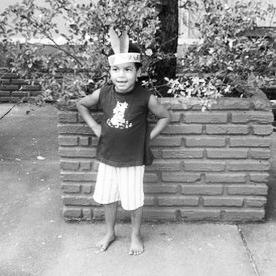
When I arrived in the Netherlands as a 5-year-old adopted child, my primary goal was to blend in and be as “normal” as possible. Living in a small village in Friesland, I was the only person of color around. Alongside my South American temperament, I carried a heavy emotional baggage from my early childhood. Adoption was relatively new then, and the focus was mainly on the adoptive parents’ perspective. Thus, I decided to keep a low profile.
However, as I grew older, I was bombarded with repetitive questions: Do you know who your parents are? Do you want to find them? These inquiries became irritating and bothersome. No one seemed to acknowledge that growing up in an entirely different country is already a challenge, let alone considering the emotional turmoil I was experiencing.
I felt abandoned, neglected, unworthy, unlovable, and constantly struggled with these feelings. Unfortunately, adoption discussions often neglect the child’s emotions. Stay tuned to my page for an article specifically addressing this topic. The journey to self-acceptance has been a milestone for me, which brings me to my next point.
Creating Awareness about Adoption Experiences
I often hear well-intentioned statements like, “But now you have a better life.” You can study, have a roof over your head, and so on. Oh, dear, you have no idea what you’re saying.
It triggers two things within me: firstly, the expectation of gratitude, as if everyone forgets that I never asked for this situation, regardless of how dire my circumstances were in Brazil. It’s essential to understand that while I appreciate the privileges I now have, I didn’t choose this path.
Secondly, it dismisses the emotional battlefield I’ve been through and continues to navigate each day. I wouldn’t wish this emotional rollercoaster on anyone.Sometimes, it’s comforting just to be heard and to share the “not knowing” with others. It’s simple yet incredibly powerful.
Empowering Other Adoptees
Many other adoptees carry similar feelings. I’m not encouraging them to rebel or speak out forcefully, but I want to convey that it’s not ungrateful to say that adoption can be difficult. It’s okay to acknowledge that adoptive parents can make mistakes. You don’t have to be ashamed of where you come from just to fit into your new country. You don’t need to diminish your worth or pretend that it doesn’t matter. You deserve to be seen and accepted for who you are, regardless of your background.
Conclusion: Adoption is a complex journey, and although I write from the perspective of an adoptee, I believe everyone can relate to the moments of feeling unaccepted.
Throughout it all, one crucial lesson stands out: regardless of external opinions, finding and accepting yourself is the most important aspect. So, let’s foster a deeper understanding of adoption, embrace our unique stories, and support each other on the path to self-acceptance.
Can you relate to the challenges of acceptance, regardless of your background? Share your experiences and thoughts in the comments below. Let’s build a community where acceptance knows no boundaries, and together, we can create a more compassionate world.

 yours Tati...
2 responses to ““Breaking the Silence: I’m Adopted, and Here’s My Unfiltered Truth””
A very open, well-written, and insightful story, Tatiane: you’re opening heart and minds and I can see you can be a force for change and for good in empowering other adopteer! Keep up the good work and if you want to hear more about empowering change in a change movement, let’s Exchange perspectives!
LikeLike
Hey Bert-Jan,
Wat leuk dat je de moeite hebt genomen om het bericht te lezen en een berichtje achter te laten. Wat kan jij mij nog meer vertellen over ’empowering change in a change movement?
LikeLike